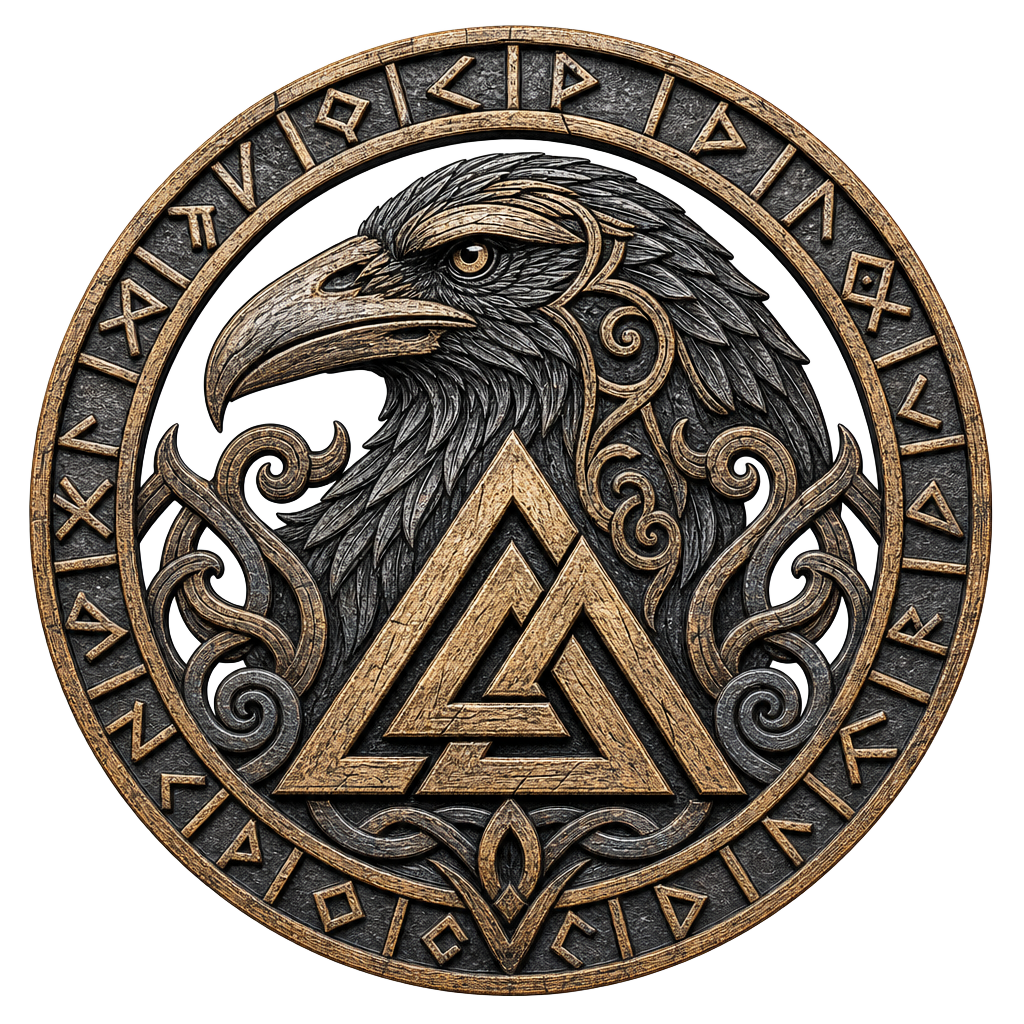
Plate 7 — Three arcs, one unbroken line
Triquetra
Þríhyrningr — the trinity knot
A three-lobed knot of interlaced vesicae, cut on Norse memorial stones and later absorbed wholesale into insular Christian art.
- Predates Christianity in northern Europe by several centuries.
- Its unbroken line makes it a protective knot — evil is said to become trapped following it.
- Often enclosed in a circle to bind the three into a single sealed unity.
Origins & Attestation
The triquetra appears on Germanic and Norse objects from the 7th century onward — on the Funbo runestone in Uppland, on coins of Olaf Guthfrithsson of Northumbria, and on Norwegian church portals carved in the surviving stave-church idiom. It travelled easily between pagan and Christian hands because it argued for the same thing in both: three that are one.
What it means
Three is the structural number of Norse thought: three Norns, three roots of Yggdrasil, three sons of Borr, the triple death of sacrifice. The knot has no beginning and no terminus, so it renders eternity as a geometry. Read alongside a goddess it is often taken as maiden, mother, crone; read alongside the cosmos, as earth, sea and sky.
How it was used
Carved on grave markers, doorframes and drinking horns; also worked into the borders of runestones as a protective closure of the inscription.
The sign today
Extremely common in Celtic-Norse jewellery, frequently used to mark a bond between three — a family, a vow, a lineage.
“Thence come the maidens, mighty in wisdom, three from the lake that stands beneath the tree.”
Vǫluspá, st. 20